FOOD THERAPY
Food has
been used as medicine in china in both humans and animals for thousands of
years. Food as medicine was initially recorded in Zhou-Li written during the
Zhou Dynasty (104 6BC to 256 BC). Food therapy is the art and science of using
selected food ingredients and/or superior herbs to feed each individual based
upon their inborn tendencies, age, species, geographical location personality,
and current disharmony or disease process. The goal is to treat or prevent
illness and maintain health by using the foods according to Traditional Chinese
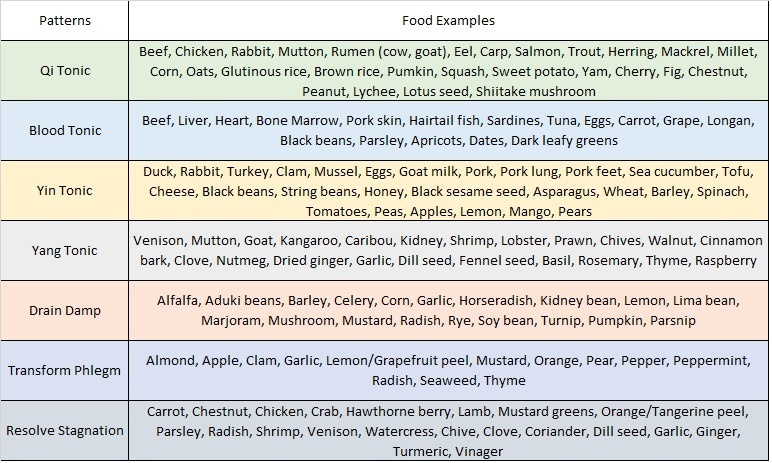
Medicine (TCVM) fundamental principles. The main fundamental principles of TCVM
food therapy are Xing/Thermal Energetics, Wei/Tastes, Bian
Zheng/Pattern Differentiation and cook pot analogy.
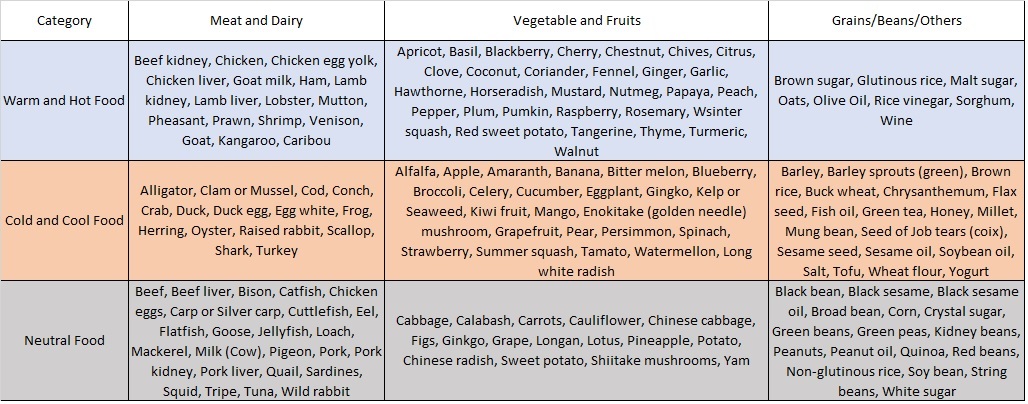
Xing or Thermal Energetics of foods
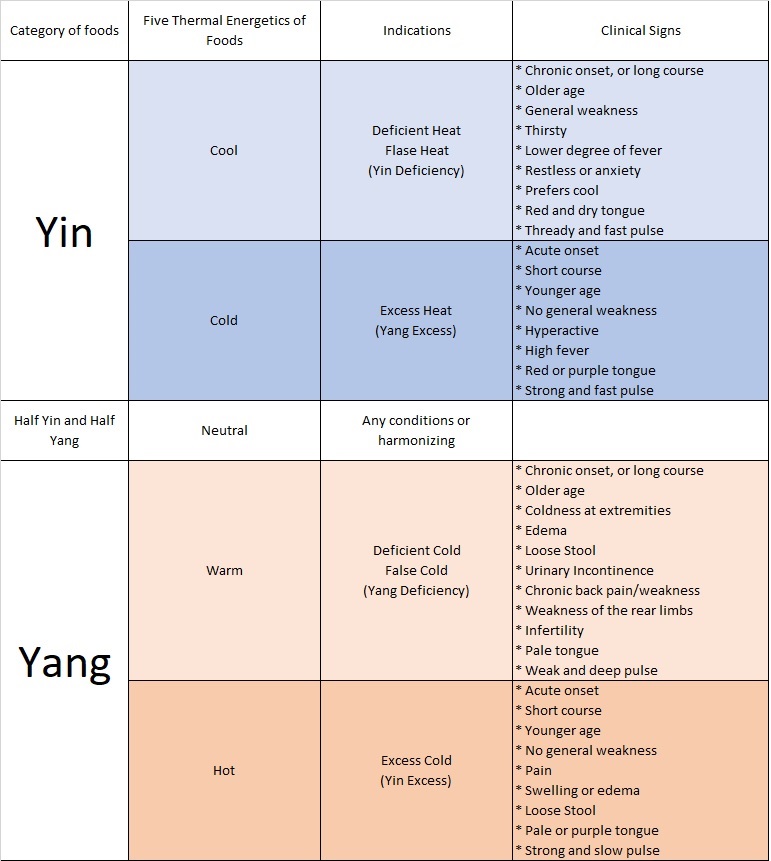
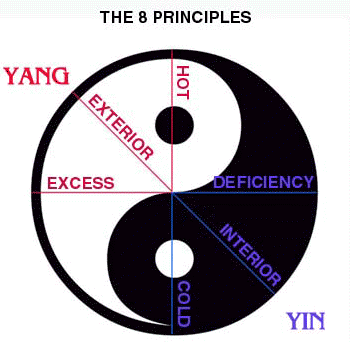
Pathogenically, Xing refers to the nature or basis of a disease, which consists of two major categories: Hot and Cold conditions.
Hot conditions include: Heat, Heat toxin, Damp-heat, Summer Heat, Yang excess pattern or False heat due to Yin deficiency. These are often seen in inflammatory, infectious and febrile disease. These hot conditions are often called Yang disease.
Cold conditions refer to Cold, Damp,
Yin excess pattern or False cold due to Yang deficiency. These cold conditions
are also called Yin disease.
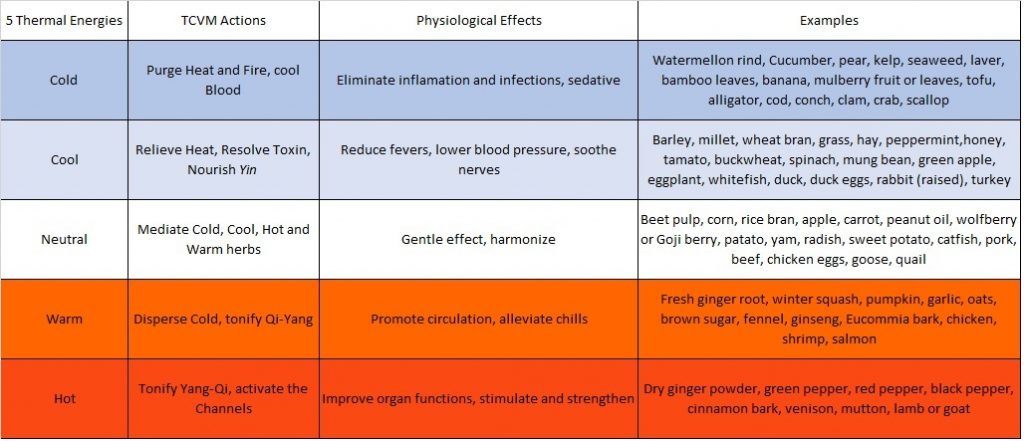
Therapeutically, Xing is thermal nature or energetics of each herb or food. Huang di nei jing defines the most important TCVM treatment principle: hot conditions are treated with cold, while cold conditions are treated with heat.The Xing of foods simply refers to the primary post-ingestion effect of a food on an individual’s body
The various
methods of food preparation can alter the energetics of foods. The initial Xing
or thermal property of a food changes from most cool to most warm in the
following order:
*Raw,
chilled-most cool
*Steamed or
poached-cooling.
*Boiled-neutral.
*Stir-fried-mildly
warming.
*Casserole/baked-most
heating.
Foods have both Xing and Wei. Xing is the Qi (energy) of foods. The Qi is the light, aromatic part of the food derived from its property, nature and aroma. The Wei, meaning taste, is the substantial, nourishing aspect. Food that is not fresh rapidly loses its Qi.
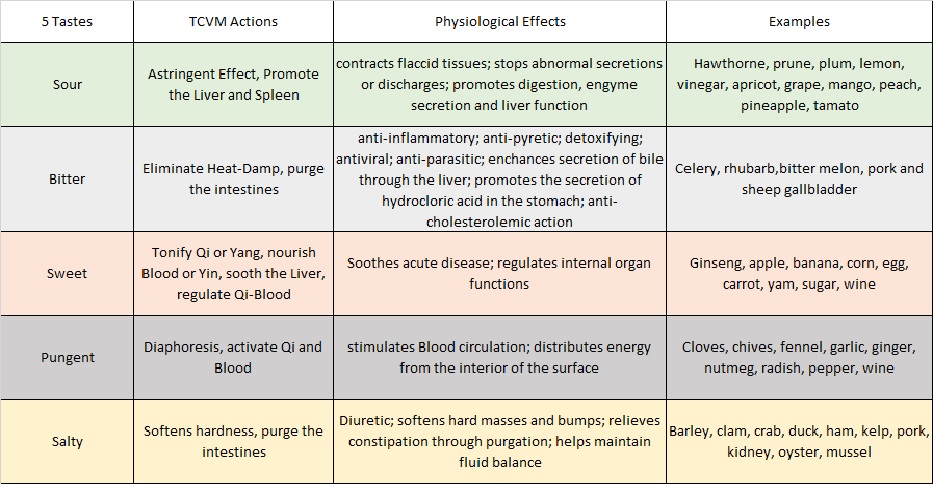
Wei or 5 flavours of foods
Sour (Wood)
– has astringent or holding/gathering quality.
Bitter
(Fire) – has draining and counteracting Dampness quality.
Sweet
(Earth) – has tonifying and moistening quality.
Pungent
(Metal) – has dispersing quality that promotes Qi and blood flow.
Salty
(Water) – has softening and detoxifying quality.
Bland
(Water) – drains dampness from the body.
Foods By Category
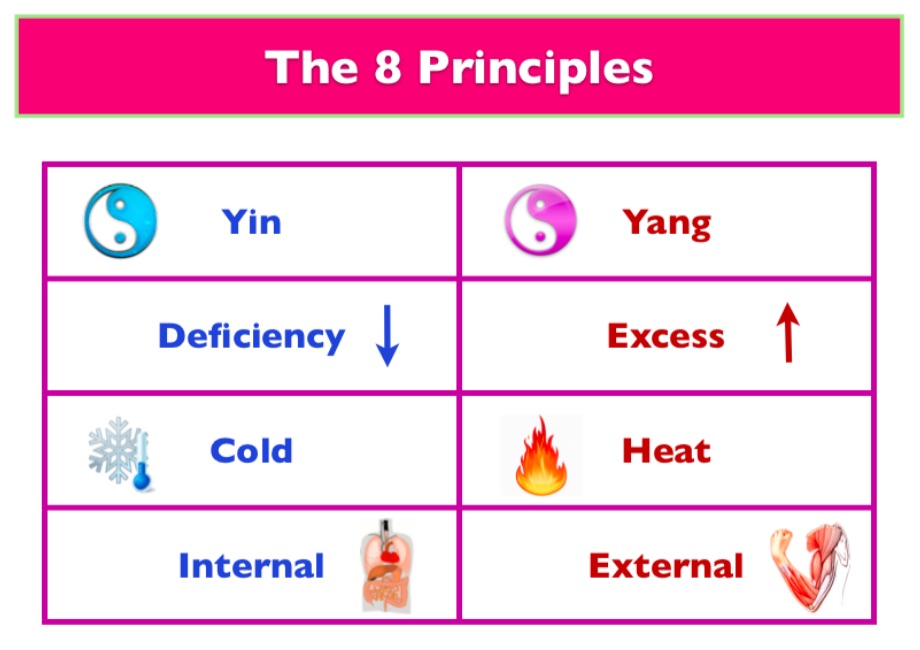
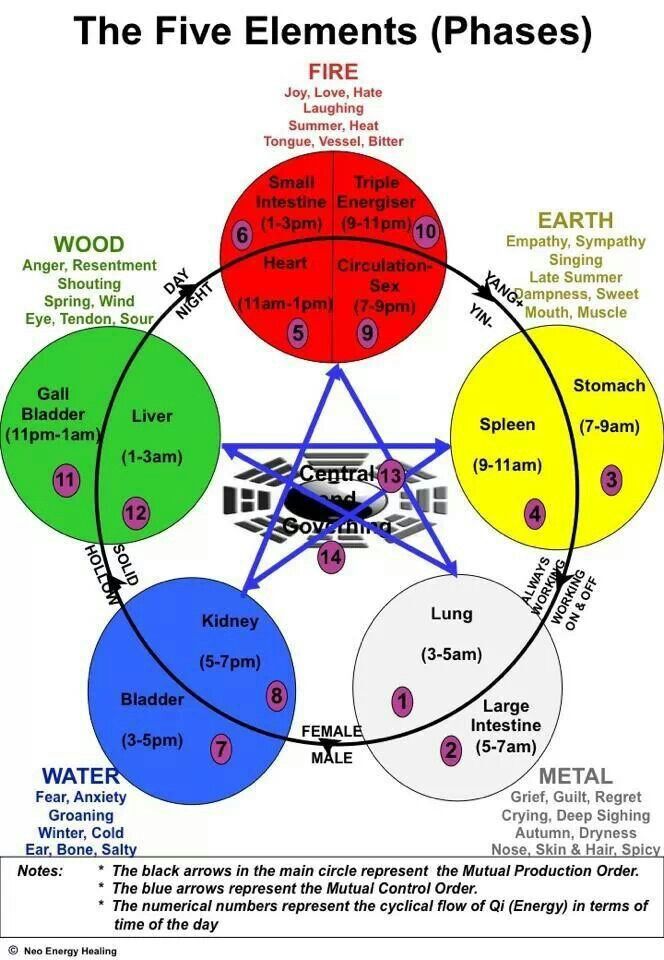
Principles and Elements (Phases)
Ref: Integrative and Traditional Chinese Veterinary Medicine Food Therapy Small animal and Equine by Margaret Fowler, DVM, MS and Huisheng Xie, DVM, PhD
Ref: Google images